Journal · October 22, 2026
Renting or Owning in NoDa: Flexibility, Control, and Cost
The rental-versus-ownership decision in NoDa starts with your time horizon, the building’s obligations, and the costs that never appear in a headline payment.
Renting and owning can put you on the same NoDa block while giving you very different responsibilities. Both can offer access to the North Davidson arts district; neither guarantees quiet, convenient parking, predictable expenses, or a home that fits your next chapter. The useful comparison is not between rent and a mortgage payment. It is between two arrangements for occupying, maintaining, and eventually leaving a home.
In NoDa Charlotte, that comparison also crosses building types: an apartment, a converted mill space, a condominium, a townhome, or a detached house. Start with your likely length of stay and financial cushion, then examine the actual lease or ownership documents. Neighborhood appeal matters, but it cannot answer those questions for you.
Separate the neighborhood choice from the tenure choice
NoDa’s identity is tied to its mill history and arts district, but the neighborhood name is not a legal description of a property. Nor is 28205 a substitute for a neighborhood boundary. A rental advertised as NoDa and a home marketed under the same label may have substantially different surroundings and access routes.
Compare exact locations rather than marketing categories. Our guide to NoDa streets and sub-pockets provides a framework for thinking at block level. For each candidate, identify the entrance you would actually use, where deliveries arrive, and the route to your everyday destinations. A building’s location on a map does not establish whether its sidewalks, crossings, or parking arrangement will work for your household.
Build two complete cost sheets
For renting, request a written breakdown tied to the specific unit and proposed lease term. Include base rent, required recurring charges, utility billing arrangements, parking, pet charges where applicable, deposits, and move-in costs. Separate refundable money from nonrefundable expenses. If a concession is offered, compare the total obligation across the lease rather than treating the discounted figure as the permanent monthly rent.
Our apartments and rentals guide is a starting point for the housing category, not a substitute for current terms from the property manager. Ask what happens at renewal, which charges can change under the agreement, and what notice is required if you intend to leave. An advertised rate cannot answer those questions.
For ownership, compare loan principal and interest alongside property taxes, insurance, association dues where applicable, utilities, maintenance, and an allowance for irregular repairs. Keep closing costs and likely future selling expenses in the calculation. Obtain current lender and insurance estimates for the property type; do not assume an online payment estimate includes every obligation.
Distinguish monthly cash flow from longer-term financial outcomes. Mortgage principal can build equity, but equity is not a repair fund you can automatically spend. Appreciation is uncertain, while transaction costs are real obligations. Renting may leave more savings accessible, but that benefit depends on what you actually retain rather than spend.
Ask who controls the building—and who pays
A renter generally has fewer direct responsibilities for major building systems, but less authority over alterations and repairs. Read the lease for maintenance reporting, access provisions, permitted changes, and responsibility for damage. Ask how urgent maintenance requests are handled. Written procedures are more useful than a broad assurance that management is responsive; applicable North Carolina law also matters.
An owner gains control only within the property’s legal and physical boundaries. A condominium owner may depend on an association for shared systems. A townhome’s appearance does not establish its ownership structure or maintenance obligations. Use the condos and townhomes guide to frame questions, then obtain the recorded declaration, governing documents, budget, reserve information, meeting minutes, and available assessment history.
Identify responsibility for roofs, windows, exterior walls, drainage, and shared access. Ask about pending assessments and insurance deductibles, not just regular dues. For a detached house, determine whether an association or recorded restrictions apply and establish the condition of major systems through appropriate inspections. Fewer shared obligations can mean more individual responsibility, not lower total expense.
Compare equivalent homes, not just equivalent payments
A rental apartment and an owned house may differ in floor area, utility use, storage, parking, and maintenance exposure. Those differences can overwhelm a simple monthly comparison. First write down the features your household actually needs, then compare options that satisfy roughly the same requirements.
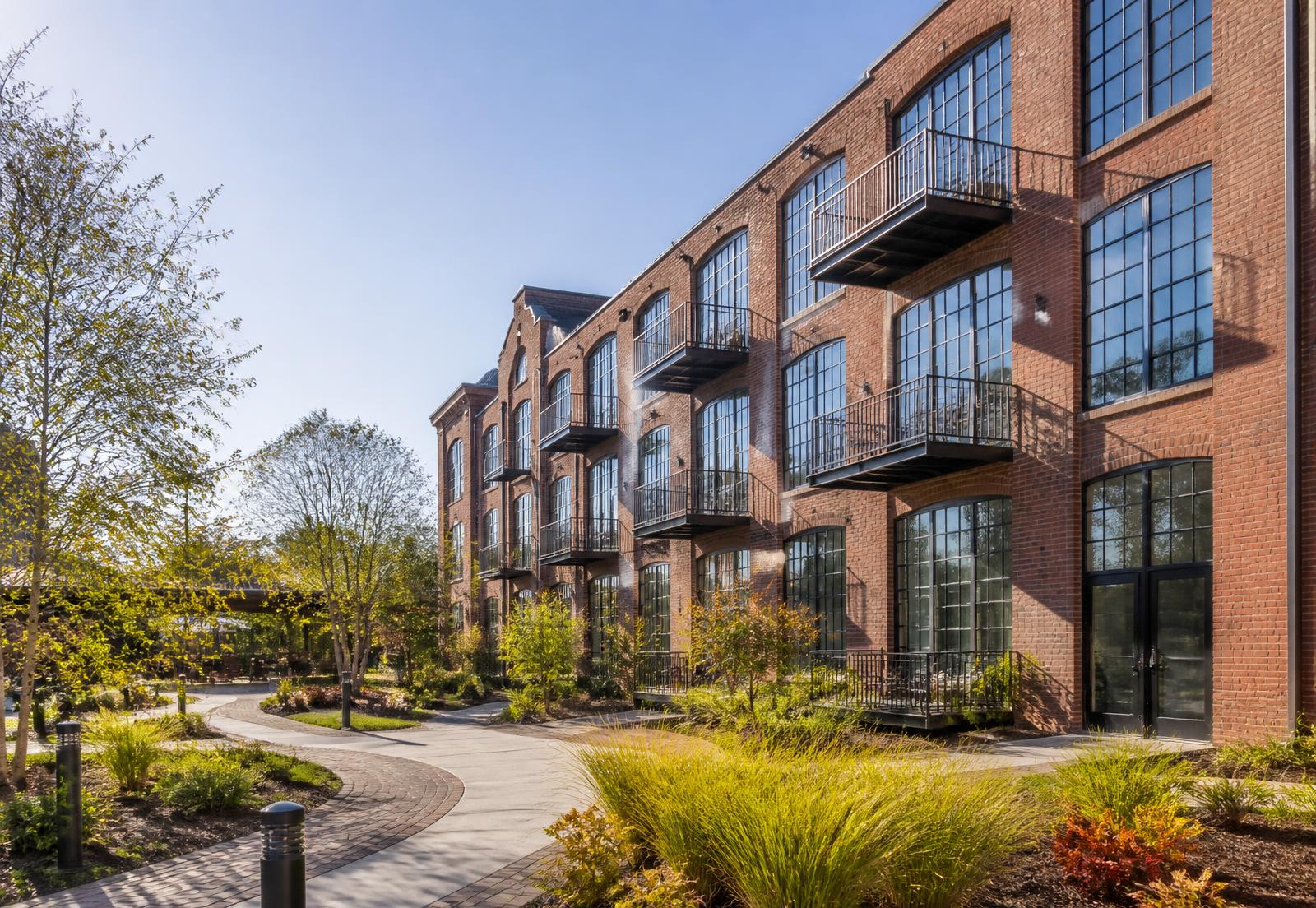
In a district with mill buildings and other housing forms, architectural character deserves practical questions. For any space, investigate sound transmission, window operation, heating and cooling arrangements, and responsibility for equipment. Our mill lofts and adaptive reuse guide offers context, but the word “loft” alone establishes neither construction performance nor whether a home is available to rent or buy.
Check the facts that can change your decision
Neither a listing description nor a neighborhood guide should be the final authority on a particular address. Before committing money, work through a short source-based checklist:
- Parcel and tax context: Use Mecklenburg County POLARIS to identify the parcel, review available ownership and assessment information, and locate related records. An assessed value is not a purchase appraisal or a guarantee of a future tax bill.
- Land use and construction: Consult City of Charlotte zoning and development resources for the parcel and nearby sites. Distinguish a proposal, an approval, a permit, and a completed project; one does not establish the others.
- Transportation: Check CATS for current routes, schedules, fares, and service notices. Compare your actual work schedule and station access using the questions in our transit and walkability guide, rather than assuming proximity makes every trip convenient.
- Schools: If assignments affect your choice, verify the exact address and relevant school year with Charlotte-Mecklenburg Schools. A ZIP code, neighborhood label, or nearby campus does not establish assignment.
Let your exit plan inform the decision
Renting can suit an uncertain job location, a changing household, or a desire to learn the district before making a larger commitment. It is not frictionless: examine early-termination terms, renewal notice, and restrictions on subletting. Owning can suit a longer horizon and a desire for greater control, provided you can absorb repairs and the uncertainty of selling when your plans change.
There is no universal break-even year. Test several holding periods using your own financing, documented housing costs, and conservative assumptions about resale. Our NoDa real estate overview provides broader context, but the decision belongs on a household worksheet. Choose the arrangement that remains workable after an unwelcome expense or a change of plans—not merely the one with the most attractive initial payment.
How this entry was made: journal entries are drafted with an AI writing model and published automatically only after passing editorial checks for length, sourcing language, internal links and banned unverified claims. They contain no first-hand visits, interviews or quotes. Read our methodology and disclosures, or report an error to npeters@yourleaderinluxury.com.
Answers
Questions & Answers
Is renting in NoDa cheaper than owning?
What should I review before buying a NoDa condo or townhome?
Which sources should I use to verify an address before renting or buying?
Where to verify: City of Charlotte Unified Development Ordinance (2023)
More from the journal
Buying a Home in NoDa: What the Address Cannot Tell You
A NoDa address tells only part of the story; a sound purchase depends on the parcel, the building, the ownership documents, and the routines around it.
NoDa Dining: Restaurants, Food Halls, and the Fine Print
Understanding NoDa dining means separating neighborhood geography, restaurant service, and food-hall logistics before choosing where to eat.
Publisher's businesses
The Peters businesses
Reading only gets a NoDa project so far. When it turns into offers, drawings or wiring, these are the companies connected to this guide.
These businesses are owned by or connected to this guide's publishers, Nicholas and Miriam Peters. Read the disclosure.
The wider family of guides is on Beyond NoDa.
- 01
Luxury real estate
Peters & Associates
The Peters brokerage's luxury practice, led by Nicholas and Miriam Peters, representing buyers and sellers privately.
Buying or selling a higher-end NoDa home — a renovated bungalow, a new infill house, a top-floor loft.
- 02
Real estate representation
Peters & Associates — The Peters Team
The same brokerage's Charlotte-wide site, with a home search and home-valuation requests. A separate website from yourleaderinluxury.com, not a redirect.
Condos, townhomes and first purchases, or weighing NoDa against other Charlotte neighborhoods.
- 03
Luxury custom home builder
Peters Custom Homes
A founder-led Charlotte builder of a small number of custom estate homes a year.
A substantial new house or major rebuild on a lot that can support one. Most NoDa lofts and condos are not that project.
- 04
Luxury spec home builder
Peters Signature Homes
The Peters spec-home company, building finished homes for sale rather than to a client's drawings.
Buyers who want a newly built house without running a build. No current NoDa inventory is implied.
- 05
Interior design
Emerald & Oak Design
Miriam Peters' interior design studio, working on custom homes, renovations and new construction.
Planning a renovation or furnishing a loft or bungalow where layout and materials both matter.
- 06
Home audio, video & technology
Peters Audio Video
Home theatres, whole-home audio, lighting control, networking and security.
Wiring a renovation or new build. In a condo, check building rules on penetrations and wiring first.
- 07
Luxury travel guides
Peters Signature Travel
Luxury travel guides, hotel reviews and destination insights.
Not a NoDa service — listed so it stays one click away.