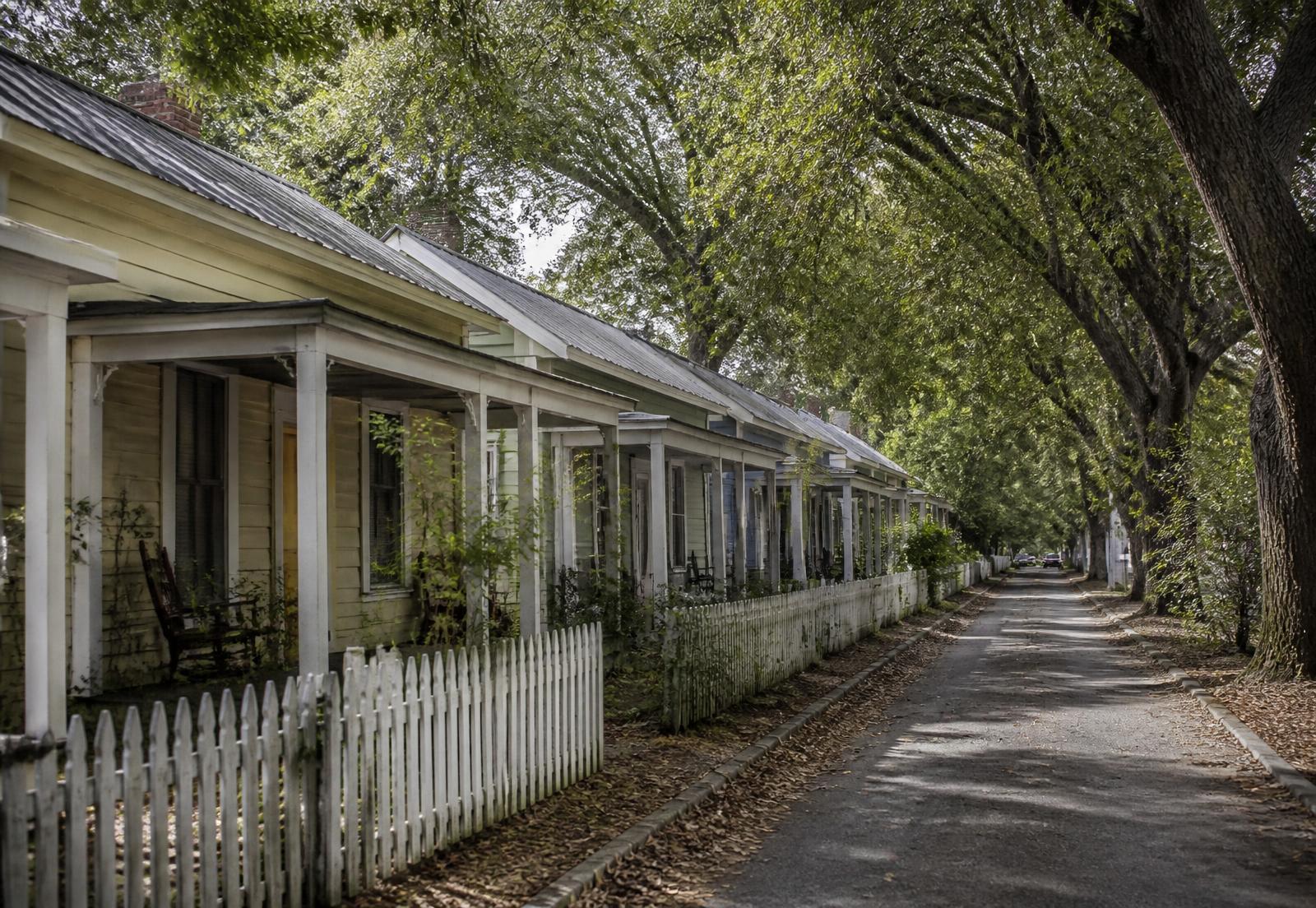
Quiet residential street of mill cottages with mature trees in NoDa Charlotte

Real estate

NoDa Streets & Sub-Pockets

In a district this small, the street you choose matters more than the neighborhood you chose.

NoDa's reputation comes from about six blocks. The other ninety percent of the district is residential, and the difference in daily experience between them is dramatic — noise, parking, traffic, and privacy all change within a two-minute walk.

This page reads the district street by street, in the terms that actually affect living there rather than in marketing language.

Scroll or pinch to zoom

N. Davidson StLYNX Blue Line36th Street Station25th Street StationSugar Creek StationHighland Park Mill No. 3Mecklenburg MillJohnston Mill Lofts36th & N. DavidsonNeighborhood TheatreThe Evening MuseNoDa Brewing Co.Birdsong BrewingCabo Fish TacoCordelia ParkCross Charlotte TrailVilla HeightsHighland Renaissance AcademyGallery Row

Interactive

NoDa at a glance

Transit

36th Street Station

LYNX Blue Line stop at the center of the district — the reason NoDa density concentrates here.

Walk from 36th St Station · 0 min

A schematic orientation map. Walk times are approximate, measured from the 36th Street Station.

The commercial spine

North Davidson Street between roughly 34th and 37th is the district in the public imagination: galleries, taprooms, restaurants, and the two principal music rooms, with apartments and live-work units above.

Living directly on it means accepting the full weekend soundtrack in exchange for stepping out into the best-served four blocks in the neighborhood. It suits some people completely and others not at all.

Commercial core

  • N. Davidson St (34th–37th)

    The strip. Maximum amenity, maximum noise, minimum parking.

  • E. 36th St

    The cross-axis to the station. Busy, walkable, and the district's main pedestrian route.

  • E. 35th & E. 37th

    One block off the spine — most of the convenience, meaningfully less noise.

The residential interior

West and north of the spine, the mill village grid holds cottages under mature canopy. These blocks are quiet on weekday evenings and only moderately affected by weekend activity, with the practical constraint being on-street parking pressure when the strip fills.

Condition varies house to house rather than street to street, a legacy of piecemeal renovation over three decades.

Residential pockets

  • Mill-village cottage blocks

    Small lots, canopy, porches. The district's quiet residential heart.

  • Blocks toward Villa Heights

    Transitional in character, generally more space per dollar, slightly further from the station.

  • North of the strip

    Newer townhome and infill activity mixed into older fabric; the most visibly changing part of the district.

The rail edge

Blocks adjacent to the Norfolk Southern corridor carry freight noise at unpredictable hours, which is a genuinely different condition from nightlife noise — it is louder, briefer, and happens at 3am.

Prices reflect it, which for some buyers makes the rail edge the best value in NoDa and for others makes it unlivable. There is no substitute for standing there.

Why two NoDa streets a block apart feel completely different

The district's street grid was laid out around a mill, not around a plan for a neighborhood, and the result is unusually abrupt transitions. A street that carries traffic to the strip behaves like a commercial approach; the parallel street one block over can be entirely residential, canopied and quiet by mid-evening.

Three variables explain most of the difference: whether the street is a through-route, whether it fronts or backs the rail corridor, and how much of its frontage is still original residential fabric rather than redevelopment. None of these are visible in a listing, and all of them are obvious after twenty minutes of walking.

Because the differences are this sharp, street-level knowledge is one of the few genuine informational advantages available in this market. It is also the part most easily verified in person before you commit.

How to read a street before you commit to an address

Visit at three times: a weekday morning, a weekday evening, and a Saturday night. Morning shows school and commuter patterns, evening shows parking pressure and how residents actually use the block, and Saturday night shows the district at its loudest. An address that works in all three is a genuinely good address.

While you are there, note the practical things: where trash and recycling stage, whether the sidewalk is continuous, how tight the street is for a moving truck or a delivery, and where you would actually park a second vehicle.

Then check what could change. Pull the zoning on any vacant or under-improved parcel on the block, and look at what has been permitted nearby recently. In a district still absorbing redevelopment, the block's future is part of the address.

A three-visit street test

  • Weekday morning

    School traffic, commuter flow and how easy it is to leave the block.

  • Weekday evening

    Resident parking pressure and the block's ordinary noise floor.

  • Saturday night

    The district at maximum volume — the honest upper bound of what you are buying.

Answers

Questions & Answers

What is the main street in NoDa?
North Davidson Street is the district's commercial spine, with the highest concentration of galleries, restaurants, breweries, and music venues between roughly 34th and 37th Streets.

Source: Mecklenburg County Environmental Health — restaurant inspections

Which streets in NoDa are quietest?
The mill-village interior blocks west and north of the North Davidson spine are substantially quieter than the commercial core, though on-street parking pressure still increases on weekend evenings.

Source: National Register of Historic Places — NC State Historic Preservation Office

Do trains affect NoDa homes?
Yes. Freight traffic uses the Norfolk Southern corridor along the district's eastern edge at all hours, and homes near it experience noise that is distinct from nightlife noise. Property values along that edge reflect it.

Source: Charlotte's Got a Lot — official visitor guide

How do I find out exactly which street a NoDa property is on and its boundaries?
Mecklenburg County's POLARIS parcel viewer shows street frontage, parcel boundaries, and dimensions for every property in the county.

Source: Mecklenburg County POLARIS 3G parcel viewer

Which NoDa streets are quietest?
The interior mill-village streets that do not function as through-routes to North Davidson are consistently the quietest, particularly those away from the rail corridor. Because conditions change block by block, visiting at night is more reliable than any general ranking.

Source: National Register of Historic Places — NC State Historic Preservation Office

How much does street parking matter in NoDa?
A great deal within a few blocks of the strip, where visitor overflow competes with residents most evenings. Off-street parking is a meaningful value factor on those blocks and matters far less in the district's outer residential pockets.

Source: Mecklenburg County Park & Recreation

Recommendations

Who we recommend in NoDa

Four specialists we point people toward when a NoDa project moves from reading to doing. Each works this neighborhood specifically, not the metro generally.

Builder & renovation

Peters Custom Homes

New construction, mill-village restorations, and additions built to survive a historic district's constraints — from foundation work on 1910 cottages to infill on tight 28205 lots.

Real estate

Peters & Associates

Representation for buyers and sellers across NoDa's lofts, bungalows, and condo communities, with the market read that comes from working one neighborhood closely.

Interior design

Emerald & Oak

Interiors for brick-and-timber lofts and small-footprint bungalows: material palettes, custom millwork, lighting, and furnishing plans that respect the building.

Smart home & AV

Peters Audio Video

Networking, whole-home audio, theater, lighting control, and shading — engineered for masonry walls and open loft volumes where signal and acoustics fight back.

Primary sources

What this page is built on

We cite the primary record rather than aggregator estimates. Where a figure moves, check the source directly before relying on it.

  1. 01Mecklenburg County POLARIS 3G parcel viewer
  2. 02City of Charlotte
  3. 03Charlotte Area Transit System — LYNX Blue Line
  4. 04Mecklenburg County Assessor's Office property records