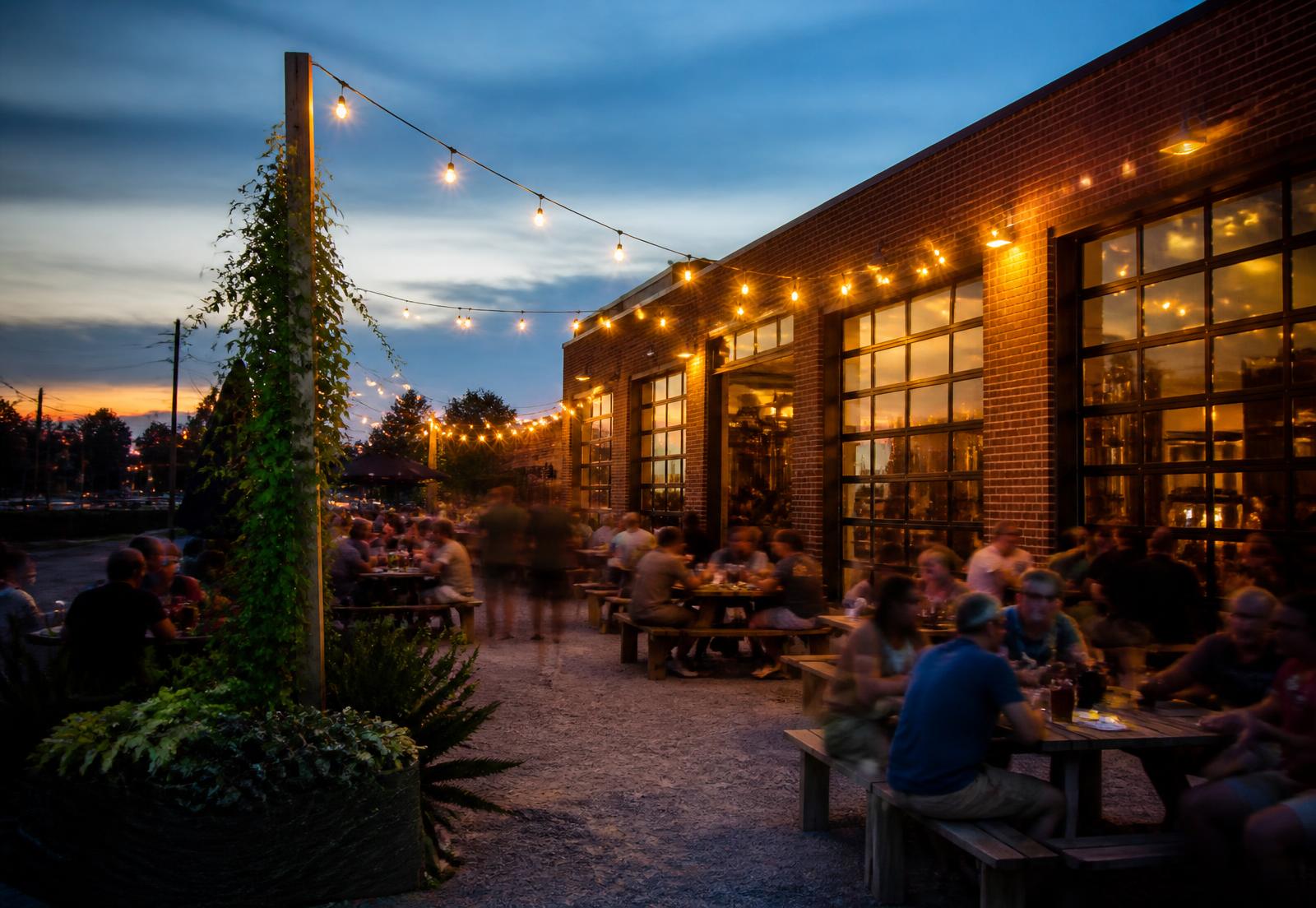
Crowded brewery taproom patio in NoDa Charlotte on a warm evening

Answers

NoDa Questions & Answers

The questions people actually ask before moving to, buying in, or spending a weekend in Charlotte's arts district.

This page collects the district's most-asked questions in one place, with a cited source under each answer. Longer treatments of most topics live on their own pages, linked throughout.

Where an answer depends on a specific address — school assignment, zoning, historic overlay — we say so rather than generalizing, because in NoDa those things change block to block.

The short version

NoDa is a compact, walkable, historically industrial neighborhood with the densest concentration of galleries, music rooms, and taprooms in Charlotte, plus two light rail stations. It costs more per square foot than the Charlotte average and less than South End.

It works well for people who want to walk to things and will trade quiet for it. It works poorly for anyone who needs a large lot, a garage, and silence on a Saturday night within two blocks of 36th Street.

What most newcomers misjudge about NoDa before living here

The most common misjudgment is treating a single weekend visit as representative of daily life. Someone who only experiences NoDa on a Saturday night on the strip will overestimate how loud and crowded the district is; someone who only sees the mill village on a Tuesday afternoon will underestimate it. The honest picture requires both.

A second common miscalculation is assuming the whole district shares one zoning or historic status. It does not — overlays, transit-oriented density allowances, and National Register recognition all apply parcel by parcel, and a general impression of "historic" or "up-zoned" can be wrong for the specific address someone is actually considering.

How the light rail changed daily life in NoDa

Before the Blue Line Extension opened in 2018, NoDa functioned largely as a driving destination reached from elsewhere in Charlotte. The two stations changed that relationship for residents near them, making an Uptown commute or a night out reachable without a car and making land near the stations valuable enough to redevelop at much higher density than before.

The tradeoff has been a shift in the district's built form near the stations, from light industrial and surface lots to five-story apartment buildings, along with new pedestrian and cyclist traffic that the mill-era street grid was not originally designed to carry.

What changed after 2018

  • Commute pattern

    Uptown and university-corridor trips became car-optional for residents near a station.

  • Land use near stations

    Underused industrial and surface-lot parcels redeveloped into higher-density housing.

  • Street-level traffic

    More pedestrian and cyclist volume than the original mill-era grid anticipated.

Answers

Questions & Answers

Is NoDa safe?
NoDa is an active urban neighborhood with the property-crime profile typical of dense districts with nightlife: opportunistic vehicle break-ins are the most common issue residents report. CMPD publishes reported incidents by division and time period, which is the right source for current, address-specific figures rather than reputation.

Source: Charlotte's Got a Lot — official visitor guide

How much does it cost to live in NoDa?
NoDa trades above the Charlotte median on a per-square-foot basis, with mill lofts and new townhomes at the top of the range and older mill-village cottages needing work at the bottom. Canopy Realtor Association publishes current median price and days-on-market figures for the market area.

Source: Canopy Realtor® Association market data

Is parking hard in NoDa?
On weekend evenings within two blocks of 36th and North Davidson, yes. The district has limited surface parking, several paid lots, and residential permit pressure on adjacent streets. Weekday parking is generally straightforward.

Source: City of Charlotte / Mecklenburg County Code Enforcement permitting

Is NoDa noisy?
On the commercial strip, yes on Friday and Saturday nights, and freight trains use the corridor at all hours. Three blocks into the mill village the noise profile drops sharply. Noise is highly address-dependent here.

Source: National Register of Historic Places — NC State Historic Preservation Office

What schools serve NoDa?
NoDa is served by Charlotte-Mecklenburg Schools, with assignment determined by address rather than neighborhood. Use the CMS school locator for the specific parcel; magnet and lottery options add further alternatives.

Source: Mecklenburg County POLARIS 3G parcel viewer

Can I run a short-term rental in NoDa?
Short-term rental regulation in Charlotte is governed by the Unified Development Ordinance and applicable zoning, and individual condo or HOA documents frequently impose stricter limits than the city does. Check both before assuming a unit can be rented nightly.

Source: City of Charlotte Unified Development Ordinance (2023)

Do I need a car in NoDa?
Many residents keep one but use it less than they expected. The Blue Line covers Uptown, the airport connection, and the university corridor; groceries and daily errands are reachable on foot or by bike from most of the district.

Source: Charlotte Area Transit System — LYNX Blue Line

Is NoDa good for families?
The mill village side has a real family population, drawn by walkability and the park. The constraints are lot size, school assignment variability, and proximity to nightlife — all of which vary sharply by block.

Source: Mecklenburg County POLARIS 3G parcel viewer

What do people get wrong about NoDa before moving there?
The most common mistake is judging the whole district from one weekend visit, which overstates the noise if it is a Saturday night on the strip or understates the energy if it is a quiet weekday in the mill village. Zoning and historic status also vary by parcel, not district-wide.

Source: City of Charlotte Unified Development Ordinance (2023)

Did the light rail make a big difference in NoDa?
Yes. The 2018 Blue Line Extension made car-optional commuting to Uptown realistic for residents near the two stations and made previously underused industrial land valuable enough to redevelop, which is the main driver of the district's recent apartment construction.

Source: Charlotte Area Transit System — LYNX Blue Line

Recommendations

Who we recommend in NoDa

Four specialists we point people toward when a NoDa project moves from reading to doing. Each works this neighborhood specifically, not the metro generally.

Builder & renovation

Peters Custom Homes

New construction, mill-village restorations, and additions built to survive a historic district's constraints — from foundation work on 1910 cottages to infill on tight 28205 lots.

Real estate

Peters & Associates

Representation for buyers and sellers across NoDa's lofts, bungalows, and condo communities, with the market read that comes from working one neighborhood closely.

Interior design

Emerald & Oak

Interiors for brick-and-timber lofts and small-footprint bungalows: material palettes, custom millwork, lighting, and furnishing plans that respect the building.

Smart home & AV

Peters Audio Video

Networking, whole-home audio, theater, lighting control, and shading — engineered for masonry walls and open loft volumes where signal and acoustics fight back.

Primary sources

What this page is built on

We cite the primary record rather than aggregator estimates. Where a figure moves, check the source directly before relying on it.

  1. 01City of Charlotte
  2. 02Canopy Realtor® Association market data
  3. 03Charlotte-Mecklenburg Schools school locator
  4. 04City of Charlotte Unified Development Ordinance (2023)
  5. 05Charlotte Area Transit System — LYNX Blue Line
  6. 06U.S. Census Bureau QuickFacts — Charlotte, NC