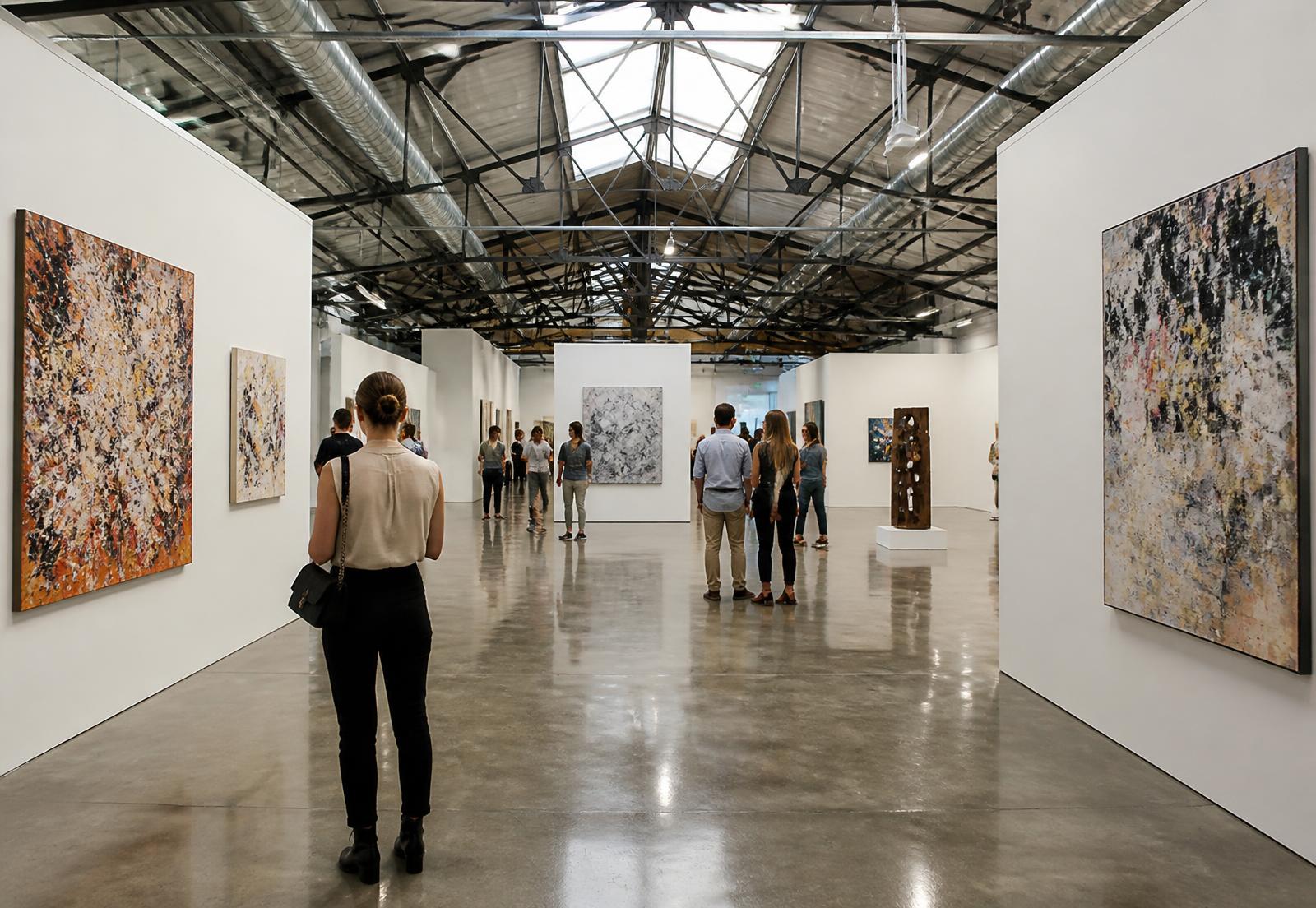
Vibrant large-scale mural covering a brick wall in NoDa Charlotte

Culture

NoDa Murals, Galleries & Public Art

The art came first, the name came second, and the murals are still the reason people photograph this neighborhood.

NoDa is Charlotte's arts district by history rather than designation. In the late 1980s and 1990s artists took cheap storefronts along North Davidson, opened galleries, and started a monthly crawl that gave the corridor a reason to exist again. That sequence is why the neighborhood has an identity that newer districts have spent a decade trying to manufacture.

Today the visible art is mostly on the walls. Murals cover facades, alley walls, and utility boxes across the district, refreshed often enough that a walk you took last year is not the walk you take today.

Where the murals are

The heaviest concentration runs along North Davidson between 34th and 37th and on the cross streets connecting to the station. Side walls facing surface lots carry the largest pieces, since they offer the biggest uninterrupted canvas.

Murals here are commissioned, permitted, and repainted on cycles, so the inventory changes. Treat any specific list, including ours, as a snapshot.

Where to look

  • N. Davidson wall murals

    The largest and most photographed works, generally on side elevations facing parking areas.

  • 36th Street corridor

    Smaller pieces along the pedestrian route between the strip and the station.

  • Utility and infrastructure art

    Painted boxes, poles, and doorways — the district's smallest and most frequently changed works.

  • Studio and gallery interiors

    Working artists' spaces, most accessible during the monthly crawl.

The economics behind the scene

The arts economy that created NoDa is also the one most exposed to its success. Rising ground-floor rents have pushed studio space to the district's edges over the last two decades, a pattern documented in arts districts everywhere.

What has kept the identity intact is that murals are cheap to maintain relative to studios, and that a critical mass of galleries and venues stayed. The Arts & Science Council is the right source for current programming and support structures in Charlotte.

how murals get commissioned and why the pieces keep changing

Murals on private buildings require the owner's consent, and larger or more visible pieces typically involve coordination with the artist, the property owner, and in some cases the city depending on placement and content. This is different from an informal painting arrangement, and it is why the district's inventory shifts on a cycle rather than randomly.

Turnover exists for practical reasons: paint weathers, buildings change ownership or get renovated, and property owners periodically commission new work to keep a wall relevant. A wall that has carried the same piece for years and one that gets repainted annually can sit two doors apart, and neither pattern says anything about the quality of the work.

Answers

Questions & Answers

Why is NoDa called the arts district?
Artists and gallery owners occupied vacant storefronts along North Davidson Street beginning in the late 1980s, establishing studios, galleries, and a monthly gallery crawl that gave the corridor its identity and its name.

Source: Arts & Science Council of Charlotte-Mecklenburg

Where are the best murals in NoDa?
The highest concentration is along North Davidson Street between roughly 34th and 37th, with large works on side walls facing surface lots and smaller pieces along the 36th Street route to the light rail station.

Source: Charlotte Area Transit System — LYNX Blue Line

Can anyone paint a mural in NoDa?
No. Murals on private property require the owner's permission and may require city approval depending on size, placement, and signage content. The Arts & Science Council and the City of Charlotte are the appropriate starting points.

Source: Arts & Science Council of Charlotte-Mecklenburg

Are there art galleries in NoDa?
Yes — working galleries and artist studios remain along the North Davidson corridor, most accessible during the monthly gallery crawl. Ground-floor rent pressure has shifted some studio space toward the district's edges over time.

Source: Arts & Science Council of Charlotte-Mecklenburg

Do murals in NoDa change often?
Yes, on an irregular cycle rather than a fixed schedule. Property owners periodically commission new work, weathering affects older paint, and building renovations sometimes remove a wall entirely. Any published list of murals, including this one, should be treated as a snapshot rather than a permanent inventory.

Source: Canopy Realtor® Association market data

Recommendations

Who we recommend in NoDa

Four specialists we point people toward when a NoDa project moves from reading to doing. Each works this neighborhood specifically, not the metro generally.

Builder & renovation

Peters Custom Homes

New construction, mill-village restorations, and additions built to survive a historic district's constraints — from foundation work on 1910 cottages to infill on tight 28205 lots.

Real estate

Peters & Associates

Representation for buyers and sellers across NoDa's lofts, bungalows, and condo communities, with the market read that comes from working one neighborhood closely.

Interior design

Emerald & Oak

Interiors for brick-and-timber lofts and small-footprint bungalows: material palettes, custom millwork, lighting, and furnishing plans that respect the building.

Smart home & AV

Peters Audio Video

Networking, whole-home audio, theater, lighting control, and shading — engineered for masonry walls and open loft volumes where signal and acoustics fight back.

Primary sources

What this page is built on

We cite the primary record rather than aggregator estimates. Where a figure moves, check the source directly before relying on it.

  1. 01Arts & Science Council of Charlotte-Mecklenburg
  2. 02Charlotte's Got a Lot — official visitor guide
  3. 03City of Charlotte
  4. 04Charlotte-Mecklenburg Historic Landmarks Commission