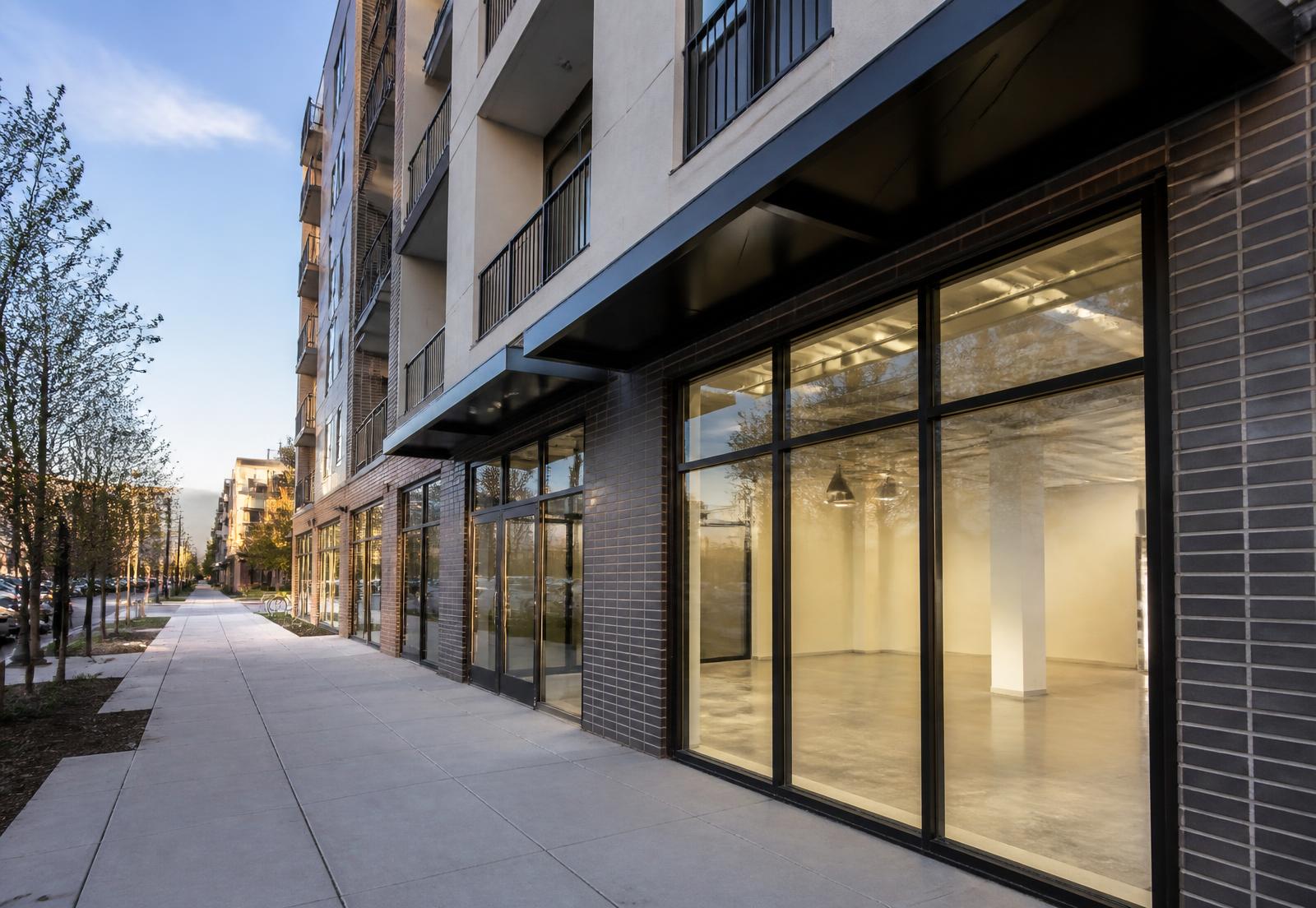
Apartment building above ground-floor retail near the NoDa light rail station

Real estate

NoDa Apartments & Rentals

The rental market that the Blue Line built — plus the older, stranger inventory that predates it.

Most people arrive in NoDa as renters. The post-2018 apartment blocks near 36th Street and 25th Street added a large volume of professionally managed doors, and they set the tone for what renting here looks like: amenity decks, structured parking, ground-floor retail, walk-to-train convenience.

Behind that, a quieter rental market exists in mill lofts, converted houses, and mill-village cottages held by individual owners. It is less polished, harder to find, and where the district's more distinctive rentals live.

The three rental categories

Institutional apartment communities dominate by volume and are the easiest to tour and lease. Loft rentals offer the district's character at a premium and with the acoustic caveats of adaptive reuse. House rentals — full cottages or subdivided ones — are scarce and typically leased through small landlords.

Rent levels track distance to the stations closely. A four-block difference is a real number, and it moves both ways: further out is cheaper and also.

What is available

  • Transit-oriented apartment communities

    Post-2018 four- and five-story blocks with amenities and structured parking. Most available inventory sits here.

  • Mill loft rentals

    Character-first units in adaptive-reuse buildings; verify acoustics and HVAC performance before signing.

  • Cottage and house rentals

    Small-landlord inventory in the mill village. Scarce, variable in condition, often the best value on space.

What to check before you sign

In a new building: parking cost separate from rent, amenity fees, and which side of the building faces the rail corridor. In an older one: HVAC age, window condition, water pressure, and whether the unit sits above a bar.

Everywhere in NoDa, walk the block at 10pm on a Saturday before committing. The difference between a quiet address and a loud one is invisible at midday.

Costs beyond rent

Parking is frequently unbundled in newer buildings and is a meaningful monthly line. Pet fees, amenity fees, and valet trash add up. On the other side, many NoDa renters genuinely reduce or eliminate a car payment by using the Blue Line, which changes the total picture.

For affordability programs and income-restricted inventory in Charlotte, HUD and the city's housing pages are the authoritative sources rather than listing sites.

How to compare NoDa apartment communities fairly

Advertised rents in the corridor are not directly comparable until you normalize them. Parking, pet rent, valet trash, amenity fees and utility billing structures differ enough between communities that two identical-looking quotes can diverge meaningfully once everything is counted. Ask each community for a full cost sheet rather than the headline rate.

Then compare the things that do not appear on a price sheet: what the unit faces, how far the walk to the station actually is, whether the parking deck is secured, and how the building handles package delivery. In a transit-oriented district, five minutes of difference in walk time changes daily life more than a modest rent difference does.

Finally, consider what is being built nearby. A community surrounded by active construction sites will have a different first year than one on a stabilized block, and lease-up incentives often reflect that.

Costs to normalize before comparing quotes

  • Parking

    Assigned, deck or street — and whether a second space is available at all.

  • Utilities and fees

    Trash, amenity and pest fees are often billed separately from base rent.

  • Pet policy

    Deposits, monthly pet rent and breed or weight limits vary widely.

  • Lease term pricing

    Short terms typically carry premiums; twelve months is usually the reference point.

  • Concessions

    Free-month offers change effective rent but often not renewal pricing.

What renting in NoDa is actually like day to day

Corridor apartments put you inside the district's best asset — walkability to the strip and the platform — and inside its main irritant, which is weekend noise and visitor traffic. Units facing North Davidson or a brewery patio live very differently from units facing an interior courtyard, and touring at the wrong time of day hides that entirely.

Practical logistics matter more here than in a suburban community. Move-in day on a narrow mill-village street requires planning, guest parking is limited nearly everywhere in the district, and freight movement on the rail corridor is audible in parts of the neighborhood at night.

Renters who treat a lease as a low-cost way to test a specific pocket before buying tend to make better purchase decisions later, because a year in the district teaches things no amount of touring will.

Answers

Questions & Answers

How much is rent in NoDa?
Rents in NoDa run above the Charlotte average, driven by walkability and light rail access, with newer transit-adjacent buildings at the top of the range. HUD publishes fair market rent data for the Charlotte metro that provides an objective baseline.

Source: Charlotte Area Transit System — LYNX Blue Line

Are there apartments near the NoDa light rail station?
Yes. Most of the district's post-2018 apartment supply was built specifically around the 36th Street and 25th Street stations, several of them within a two-minute walk of a platform.

Source: Charlotte Area Transit System — LYNX Blue Line

Is parking included with NoDa apartments?
Often not. Newer buildings frequently charge separately for structured parking, and street parking near the strip is constrained. Confirm the monthly cost and whether the space is assigned before signing.

Source: Mecklenburg County Park & Recreation

Can I rent a mill loft in NoDa?
Yes — some units in the adaptive-reuse buildings are leased by individual owners rather than a single management company. Inventory is limited and turns over less predictably than in the large apartment communities.

Source: Canopy Realtor® Association market data

Do I need a car if I rent in NoDa?
Many residents manage without one. The Blue Line reaches Uptown in about ten minutes, and daily errands are walkable from most of the district, though a car remains useful for larger trips.

Source: Charlotte Area Transit System — LYNX Blue Line

Is it worth renting in NoDa before buying?
For most people, yes. A lease lets you learn how a specific pocket behaves at night, on weekends and during events before committing to a purchase, and the district varies enough block to block that lived experience beats touring.

Source: Charlotte's Got a Lot — official visitor guide

What should I ask a NoDa apartment community during a tour?
Ask for a full cost sheet including parking, utility billing and fees, what the unit faces, the real walking time to the 36th Street platform, guest parking rules, and what construction is planned nearby during your lease term.

Source: Mecklenburg County Park & Recreation

Recommendations

Who we recommend in NoDa

Four specialists we point people toward when a NoDa project moves from reading to doing. Each works this neighborhood specifically, not the metro generally.

Builder & renovation

Peters Custom Homes

New construction, mill-village restorations, and additions built to survive a historic district's constraints — from foundation work on 1910 cottages to infill on tight 28205 lots.

Real estate

Peters & Associates

Representation for buyers and sellers across NoDa's lofts, bungalows, and condo communities, with the market read that comes from working one neighborhood closely.

Interior design

Emerald & Oak

Interiors for brick-and-timber lofts and small-footprint bungalows: material palettes, custom millwork, lighting, and furnishing plans that respect the building.

Smart home & AV

Peters Audio Video

Networking, whole-home audio, theater, lighting control, and shading — engineered for masonry walls and open loft volumes where signal and acoustics fight back.

Primary sources

What this page is built on

We cite the primary record rather than aggregator estimates. Where a figure moves, check the source directly before relying on it.

  1. 01HUD — fair housing and rental assistance resources
  2. 02Charlotte Area Transit System — LYNX Blue Line
  3. 03Canopy Realtor® Association market data
  4. 04City of Charlotte
  5. 05U.S. Census Bureau QuickFacts — Charlotte, NC