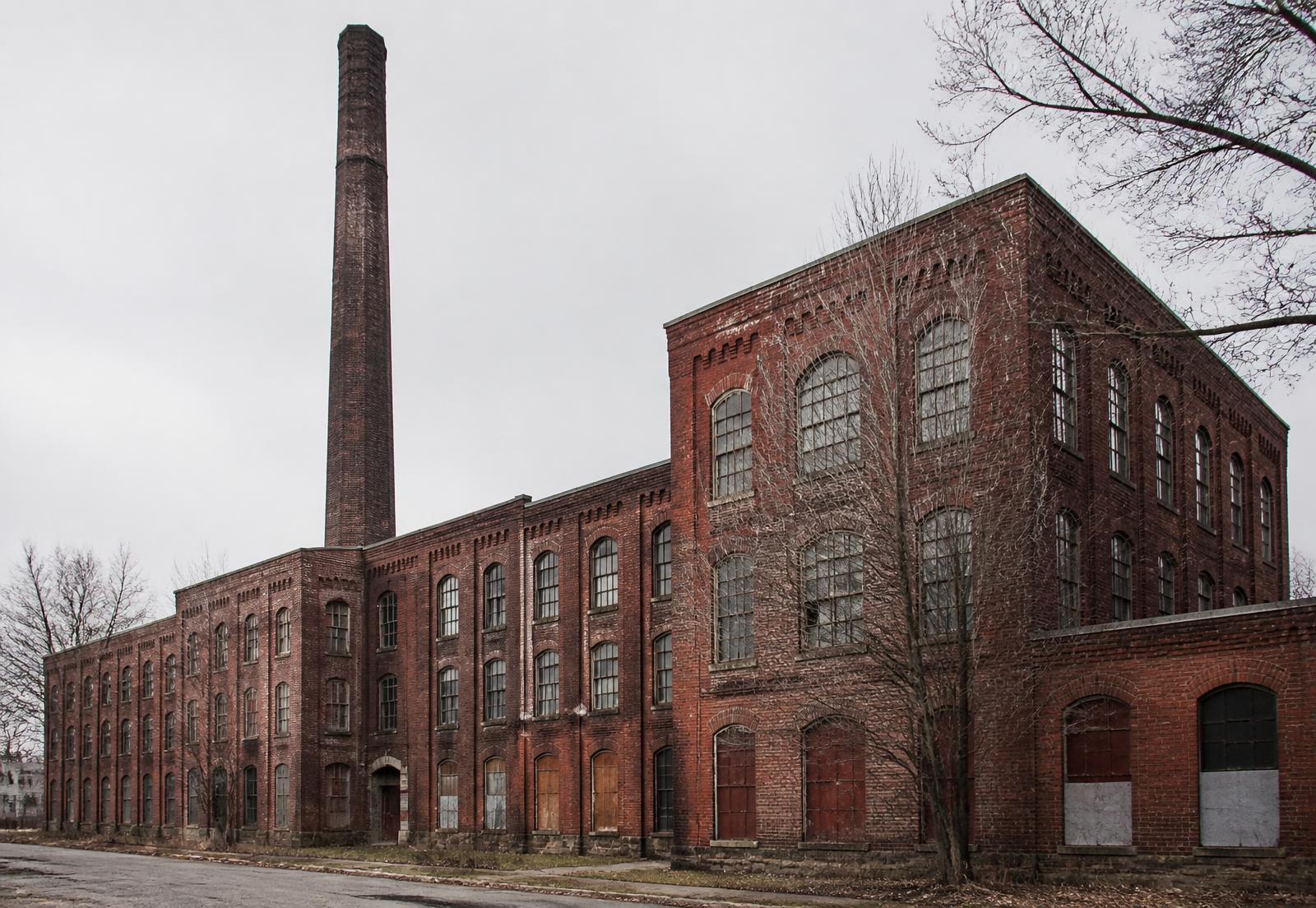
Historic brick textile mill building with tall arched windows in NoDa Charlotte

Orientation

History of NoDa & the Mill Village

Three distinct lives in one square mile: a company town, an abandoned corridor, and the arts district that grew out of the wreckage.

NoDa exists because of cotton. In 1903 the Highland Park Manufacturing Company opened Mill No. 3 on North Davidson Street, and around it built the housing, church, and store that a mill village required. The Mecklenburg Mill followed. For half a century, the blocks north of Uptown were a self-contained working settlement whose rhythm was set by a shift whistle.

The textile economy left Charlotte in stages through the mid-twentieth century, and by the 1970s the mills were dark and the village had lost its reason for existing. What happened next is the part that made the neighborhood: in the 1980s artists began buying cheap storefronts, and by the mid-1990s the gallery crawl on North Davidson had given the district both an identity and a name.

1903–1950: the company town

Highland Park Mill No. 3 was one of the largest cotton mills in the region when it opened, and its workforce lived within walking distance by design. The small lots and narrow street grid you still see are not a planning accident — they are the physical residue of housing built to serve a factory.

The cottages of that era, mostly one-story frame houses with modest porches, were built quickly and to a pattern. Their survival in numbers is the reason the district reads as historic today, and the reason renovation here runs into more surprises than in a typical postwar Charlotte neighborhood.

1950–1985: the empty decades

As textile production consolidated and moved, the mills wound down and the village lost its anchor. Storefronts emptied. Housing stock aged without capital behind it. For roughly three decades North Davidson Street was a corridor that Charlotte drove past rather than to.

That neglect is, paradoxically, why the neighborhood is intact. Nothing was worth demolishing for something bigger, so the 1903 fabric stayed standing long enough to become valuable again.

1985–2005: the artist era and the naming

Cheap rent brought studios, then galleries, then the gallery crawl that still runs on the first and third Fridays of the month. The Neighborhood Theatre reopened a 1940s movie house as a music venue. Restaurants followed the crowds the galleries created.

The NoDa name dates from this period, deliberately borrowed from the SoHo naming convention to signal what the district was becoming. By the early 2000s the transformation was complete enough that the original artists were already being priced out — the familiar arc, run at Charlotte speed.

2005–today: lofts, light rail, and density

Adaptive reuse turned the mill buildings into lofts, and the arrival of the LYNX Blue Line Extension in 2018 rewrote the development math for every underused parcel near 36th Street. Apartment blocks and townhome rows filled land that had been warehouses and gravel.

The current tension in NoDa is between those two eras: a fragile historic village and a transit corridor the city has explicitly targeted for growth. Nearly every planning argument in the neighborhood is a version of that same disagreement.

Common misconceptions about how old NoDa's buildings actually are

Because the district reads as historic, visitors often assume every building on the strip predates the mill era. In practice the commercial core is a mix: a genuine 1903-to-1920s core, a scatter of infill from the empty decades that is closer to fifty years old than one hundred, and a growing share of buildings finished after 2018 that were designed to echo the older brick vocabulary without being historic at all.

The distinction matters for anyone assuming historic-tax-credit eligibility or exterior-review protection applies neighborhood-wide. It does not. Those protections attach to specific listed structures and locally recognized areas, not to the district's general aesthetic, so a building that looks like a converted mill may simply be new construction built to match one.

How to research the construction history of a specific NoDa address

Anyone deciding whether a building is original mill-village fabric, later infill, or new construction dressed in old materials can check the county's records rather than guessing from the facade. Mecklenburg County's property records list year built and permit history by parcel, and the state historic preservation office's survey files cover which structures within the recognized area carry protection.

Where to check before assuming a building is original

  • Mecklenburg County property record card

    Lists official year built, square footage, and permit history for the parcel.

  • NC SHPO survey and National Register files

    Confirms whether a specific structure, not just the general area, carries listing status.

  • City permit records

    Shows recent additions, facade work, or full rebuilds that a period-style exterior can otherwise disguise.

Answers

Questions & Answers

When was NoDa built?
The mill village dates to 1903, when Highland Park Manufacturing opened Mill No. 3 on North Davidson Street and built worker housing around it. Most surviving cottages date from 1903 to the 1920s.

Source: National Register of Historic Places — NC State Historic Preservation Office

Why is it called NoDa?
The name is a contraction of North Davidson Street, adopted by artists and gallery owners in the 1990s to brand the emerging arts district, following the pattern of SoHo in New York.

Source: Arts & Science Council of Charlotte-Mecklenburg

Are the NoDa mills on the National Register of Historic Places?
The Highland Park and Mecklenburg mill complexes and portions of the surrounding village carry National Register recognition through the North Carolina State Historic Preservation Office. Listing status affects rehabilitation tax credit eligibility.

Source: National Register of Historic Places — NC State Historic Preservation Office

What happened to the textile mills in NoDa?
Production wound down through the mid-twentieth century as the textile industry consolidated and relocated. The buildings sat largely vacant until adaptive-reuse conversions began turning them into lofts and studio space.

Source: National Register of Historic Places — NC State Historic Preservation Office

When did the light rail reach NoDa?
The LYNX Blue Line Extension opened in 2018, adding the 36th Street and 25th Street stations and triggering the district's most recent development wave.

Source: Charlotte Area Transit System — LYNX Blue Line

Are all the older-looking buildings in NoDa actually from the mill era?
No. The strip mixes genuine 1903-to-1920s structures with mid-century infill and newer construction built to echo the older brick style. Year-built and permit records at the county are the only reliable way to tell them apart from the street.

Source: City of Charlotte / Mecklenburg County Code Enforcement permitting

Does historic status protect every old building in NoDa from teardown?
No. Protection attaches to specific listed structures and the locally recognized historic area, not to the district generally. A building outside those boundaries can be altered or replaced regardless of its age or appearance.

Source: City of Charlotte Unified Development Ordinance (2023)

Recommendations

Who we recommend in NoDa

Four specialists we point people toward when a NoDa project moves from reading to doing. Each works this neighborhood specifically, not the metro generally.

Builder & renovation

Peters Custom Homes

New construction, mill-village restorations, and additions built to survive a historic district's constraints — from foundation work on 1910 cottages to infill on tight 28205 lots.

Real estate

Peters & Associates

Representation for buyers and sellers across NoDa's lofts, bungalows, and condo communities, with the market read that comes from working one neighborhood closely.

Interior design

Emerald & Oak

Interiors for brick-and-timber lofts and small-footprint bungalows: material palettes, custom millwork, lighting, and furnishing plans that respect the building.

Smart home & AV

Peters Audio Video

Networking, whole-home audio, theater, lighting control, and shading — engineered for masonry walls and open loft volumes where signal and acoustics fight back.

Primary sources

What this page is built on

We cite the primary record rather than aggregator estimates. Where a figure moves, check the source directly before relying on it.

  1. 01National Register of Historic Places — NC State Historic Preservation Office
  2. 02Charlotte-Mecklenburg Historic Landmarks Commission
  3. 03Charlotte Area Transit System — LYNX Blue Line
  4. 04City of Charlotte
  5. 05Mecklenburg County POLARIS 3G parcel viewer