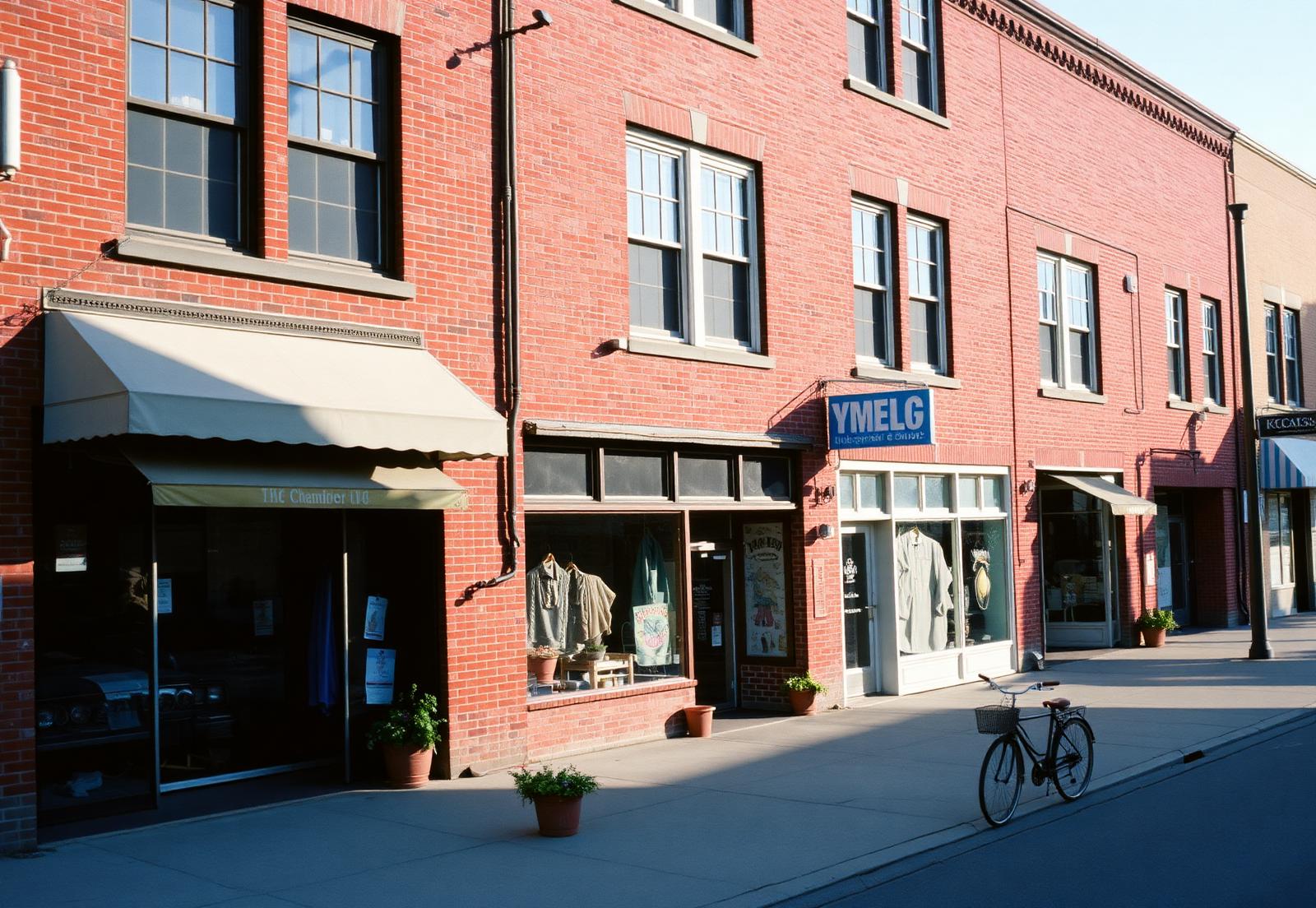
Independent storefronts with awnings and plate-glass windows in a brick commercial block in NoDa Charlotte

Culture

Shopping in NoDa

A small, independent, walkable retail strip — and the reasons it has stayed that way.

NoDa is not a shopping destination in the mall sense, and that is the point. The retail here is small-footprint, owner-operated, and concentrated in a few blocks of century-old commercial storefronts where the rent structure still allows a one-person business to survive.

What you find is a specific mix: vintage clothing, records, books, art supplies, plants, home goods, and maker studios that sell directly out of the space where the work is made. It rewards browsing on foot far more than it rewards a targeted trip.

Where the retail actually clusters

Shopping in NoDa follows the historic commercial spine: North Davidson Street and the block of 36th Street closest to it. That is where the original storefront bays were built, and it is still where nearly all street-level retail sits today.

Newer mixed-use buildings have added ground-floor commercial space around the edges, but the character retail — the shops people actually come for — remains in the older bays. Walking the corridor in one pass covers most of it.

The categories that define NoDa retail

The retail mix has held a recognizable shape for years, even as individual businesses have turned over. Knowing the categories helps you plan a visit and tells you something about the neighborhood's economics.

What you will find

  • Vintage and secondhand clothing

    Curated rather than thrift-volume. Small racks, tight editing, and prices that reflect selection work.

  • Records and print

    Vinyl, zines, books and paper goods — categories that survive because they benefit from browsing in person.

  • Art and maker goods

    Studios and small galleries selling directly. The overlap with the arts district's original identity is direct.

  • Home, plants and gifts

    Small-format home goods that suit loft and apartment living, which is most of the local customer base.

  • Specialty food and drink retail

    Bottle shops, coffee retail, and bakery counters that convert daytime foot traffic into repeat local business.

Why national chains have not taken the corridor

The building stock is the main reason. The historic commercial bays along North Davidson are small, irregular, and often lack the loading, frontage, and parking counts that national retail formats require. A tenant who needs 4,000 contiguous square feet with a rear dock has very few options here.

That constraint has functioned as accidental protection. It keeps rents accessible to independents, keeps the storefront rhythm visually varied, and preserves the reason people walk the street in the first place. The newer ground-floor bays in mixed-use buildings are more conventional, and they draw a slightly different tenant profile.

How to shop NoDa without wasting a trip

Hours are the single biggest thing to plan around. Independent shops here frequently open late morning or midday, close earlier than a mall would, and keep reduced hours early in the week. A Saturday or Sunday afternoon is the reliable window; a Monday morning is not.

Park once and walk. The corridor is short enough to cover on foot, and moving the car between blocks costs more time than walking. If you are coming from Uptown or South End, the Blue Line to 36th Street Station drops you at the north end of the retail strip.

Combine it with food. Most people shop NoDa as part of a longer visit — coffee, a walk past the murals, shopping, then dinner — rather than as a standalone errand. The district is built for that sequence.

Everyday shopping versus destination shopping

It is worth being direct: NoDa handles destination and specialty shopping well, and everyday shopping less well. Full-service grocery, big-box goods, and most national services sit outside the district, generally a short drive toward Uptown, the Plaza corridor, or the University area.

For residents, that means a car or a delivery habit for the weekly run and walkability for everything else. Buyers used to suburban one-stop convenience should account for that split before assuming a fully car-free routine.

What shopping tells you about the neighborhood

Retail mix is a reliable signal of neighborhood trajectory. A corridor holding independent, low-margin, browsing-dependent shops is a corridor with real pedestrian traffic and rents that have not yet outrun small operators.

Watch that mix over time. If it shifts sharply toward services and chains, the underlying rent and foot-traffic economics have changed — which usually shows up in residential pricing before it shows up in listings.

Answers

Questions & Answers

Is there shopping in NoDa?
Yes — a walkable strip of independent shops along North Davidson Street and 36th Street, weighted toward vintage clothing, records, books, art, plants and home goods. There is very little chain retail.

Source: CEDIA — integrated home technology standards

Where is the main shopping street in NoDa?
North Davidson Street, concentrated around its intersection with 36th Street, where the historic commercial storefronts are.

Source: CEDIA — integrated home technology standards

Is there a grocery store in NoDa?
Full-service grocery generally sits outside the core district, a short drive away. Residents typically walk for dining, coffee and specialty shopping and drive or deliver for the weekly grocery run.

Source: Mecklenburg County Environmental Health — restaurant inspections

When are NoDa shops open?
Independent shops often open late morning and keep reduced hours early in the week. Weekend afternoons are the most reliable time to find everything open.

Source: Charlotte's Got a Lot — official visitor guide

Is NoDa shopping walkable?
Yes. The retail strip is short enough to cover on foot in one pass, and the 36th Street Blue Line station sits at the north end of it.

Source: Charlotte Area Transit System — LYNX Blue Line

Recommendations

Who we recommend in NoDa

Four specialists we point people toward when a NoDa project moves from reading to doing. Each works this neighborhood specifically, not the metro generally.

Builder & renovation

Peters Custom Homes

New construction, mill-village restorations, and additions built to survive a historic district's constraints — from foundation work on 1910 cottages to infill on tight 28205 lots.

Real estate

Peters & Associates

Representation for buyers and sellers across NoDa's lofts, bungalows, and condo communities, with the market read that comes from working one neighborhood closely.

Interior design

Emerald & Oak

Interiors for brick-and-timber lofts and small-footprint bungalows: material palettes, custom millwork, lighting, and furnishing plans that respect the building.

Smart home & AV

Peters Audio Video

Networking, whole-home audio, theater, lighting control, and shading — engineered for masonry walls and open loft volumes where signal and acoustics fight back.

Primary sources

What this page is built on

We cite the primary record rather than aggregator estimates. Where a figure moves, check the source directly before relying on it.

  1. 01Charlotte's Got a Lot — official visitor guide
  2. 02Arts & Science Council of Charlotte-Mecklenburg
  3. 03Charlotte Regional Business Alliance
  4. 04City of Charlotte