Journal · October 5, 2026
From NoDa to Work: Planning a Blue Line Commute
A useful NoDa commute plan starts at your door, not the platform, and accounts for the trip home as carefully as the ride to work.
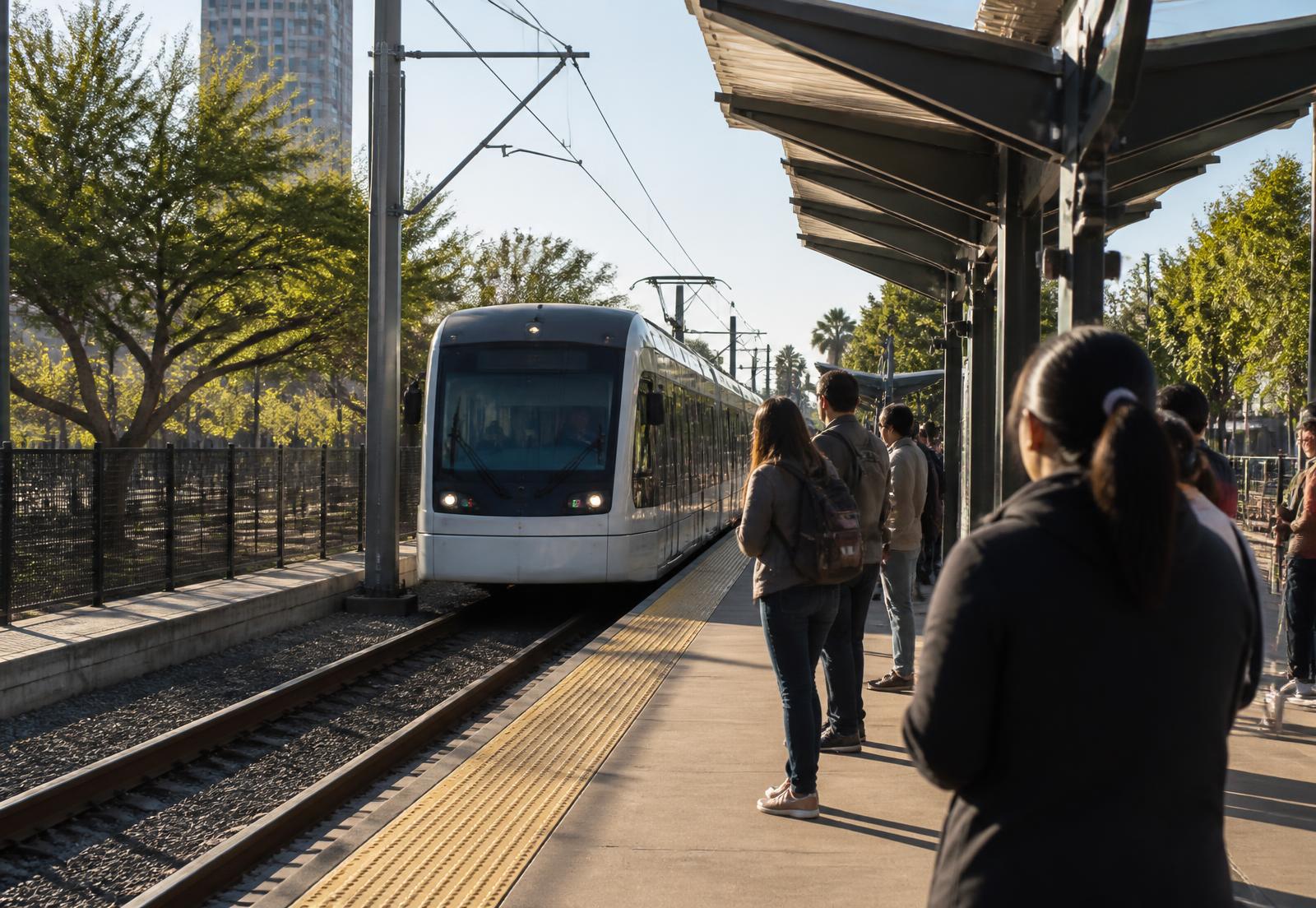
The LYNX Blue Line gives NoDa a rail connection to Uptown, South End, and the UNC Charlotte area. That is meaningful transportation infrastructure, but it is not a complete description of anyone’s commute. A train can connect two districts while leaving important questions unanswered: How do you reach the platform? Where is your workplace entrance? Does the service schedule fit the hours you actually work?
For anyone considering NoDa Charlotte as a home base, the useful distinction is between living near rail and having a workable rail commute. The former is a location characteristic. The latter depends on a chain of routes, schedules, and access conditions. Our NoDa transit and walkability guide provides neighborhood context; the following framework explains what to verify with CATS and other primary sources before relying on that connection.
Start with the station entrance, not the neighborhood label
36th Street Station is a key Blue Line reference point for NoDa. Depending on the starting address, 25th Street Station may also deserve comparison. Neither the NoDa name nor a 28205 mailing address tells you which platform is easiest to reach. ZIP codes organize mail, not pedestrian access, and neighborhood descriptions are not measurements of a commute.
Use the NoDa map to orient yourself, then use CATS station information to identify actual access points. Trace a route from the building exit you would use to the platform entrance, rather than drawing a straight line between map pins. Rail corridors, large parcels, and limited crossing options can make a seemingly short connection indirect.
North Davidson is the district’s namesake corridor, but a North Davidson address alone does not establish station convenience. Compare the routes available from individual blocks. The guide to NoDa streets and sub-pockets can help frame those differences without treating every part of the neighborhood as interchangeable.
Build the commute as a sequence
A useful estimate includes more than the scheduled train ride. Write down each stage separately, leaving uncertain items marked as uncertain. This makes it easier to see whether the weak point is station access, a transfer, or the destination end of the trip.
- Building to sidewalk: Include the actual exit, elevator, stairs, or bicycle-storage access you would use.
- Sidewalk to platform: Identify crossings and the station approach, including the route needed for a wheelchair, mobility device, or stroller.
- Platform wait: Consult the CATS schedule for the relevant day and departure period. Do not assume trains arrive at identical intervals throughout the day.
- Rail journey: Check the correct direction, boarding station, and destination station using current CATS information.
- Station to workplace: Account for the office entrance, campus path, security process, or connecting bus—not merely the destination’s street address.
Keep a scheduled estimate separate from a personally observed test trip. If you test the route, record the day, departure period, and any unusual conditions. One successful journey is useful evidence about that journey, not proof that every workday will unfold the same way.
Check the return trip before judging the outbound one
A morning connection can look convincing while the trip home remains awkward. Use the CATS trip planner for both directions and for each work pattern that matters: a regular weekday, a weekend shift, or an evening departure. Check current service alerts alongside the schedule. A timetable and an alert answer different questions.
If your workday sometimes ends late, find the last usable departure for the whole journey, including any connecting bus. The last train at one station does not necessarily preserve the final connection elsewhere. For an early shift, check the first usable service rather than assuming rail will be operating when you need to leave.
Transfers deserve particular attention. Ask what happens if the first leg arrives after the connection has departed. The answer might be another scheduled service, a different route, or a fallback that costs more than you want to spend. That possibility belongs in the commute decision, not in an emergency improvisation.
Treat station access as its own transportation question
Walking, cycling, taking a feeder bus, and being dropped off each create a different station-access plan. Do not assume a station has commuter parking simply because it serves a residential area. Check the CATS station’s listed facilities, and consult the City of Charlotte for applicable street-parking rules. Our NoDa parking guide offers context, but posted restrictions and current official information govern a particular space.
For cycling, confirm CATS rules for bringing a bicycle aboard and the facilities available at the station. Think through where the bicycle will go at the destination, too. A workable departure from home can still end with an unresolved storage problem at work.
Accessibility requires more detail than a general statement that rail is accessible. Consult CATS accessibility information and any relevant equipment alerts. Identify the usable station entrance and platform approach, then evaluate the sidewalk portion separately. If a crossing, obstruction, or proposed street change raises questions, use City of Charlotte transportation and project resources to establish its status rather than assuming a mapped improvement is complete.
Separate housing claims from transportation facts
Descriptions such as “near light rail” are starting points for questions, not commute guarantees. When comparing housing types through the NoDa buildings and communities guide, keep the same route checklist for each candidate. The building entrance and internal circulation can matter even when two buildings appear similarly close to a station.
Use Mecklenburg County POLARIS to clarify parcel location and mapped property boundaries when those affect your understanding of a route. A parcel map does not establish permission to cross private land. Confirm lawful public access and any building-specific access arrangements separately. Likewise, proximity to the Blue Line does not establish a Charlotte-Mecklenburg Schools assignment or school transportation eligibility; households with school trips should verify those directly with CMS.
Keep a small, repeatable verification routine
Before making a housing or work-travel decision, save a simple comparison: outbound route, return route, required transfers, station-access questions, and fallback. Verify fares and payment rules with CATS rather than relying on an old budget. Check City resources for street projects that could affect access, distinguishing proposals from work whose completion is officially documented.
Our editorial standards explain why these source distinctions matter. The durable advantage of the Blue Line is the connection it provides; the personal value comes from whether that connection fits your ordinary day. A sound NoDa commute plan should work beyond an ideal departure—and make clear what you will do when it does not.
Answers
Questions & Answers
Which Blue Line station should I consider for a NoDa commute?
How should I estimate a Blue Line commute from NoDa?
What should I verify before relying on the Blue Line for work?
More from the journal
NoDa Taprooms: A Neighborhood Beyond the Beer List
Understanding NoDa’s taproom culture starts with the neighborhood—and with checking what a brewery name, event calendar, or patio photograph cannot tell you.
The LYNX Blue Line in NoDa: A Commuter's Seasonal Reality Check
An editorial examination of the LYNX Blue Line's impact on daily commuting in NoDa, analyzing what transit rhythms have evolved and what core patterns remain steady.
Publisher's businesses
The Peters businesses
Reading only gets a NoDa project so far. When it turns into offers, drawings or wiring, these are the companies connected to this guide.
These businesses are owned by or connected to this guide's publishers, Nicholas and Miriam Peters. Read the disclosure.
The wider family of guides is on Beyond NoDa.
- 01
Luxury real estate
Peters & Associates
The Peters brokerage's luxury practice, led by Nicholas and Miriam Peters, representing buyers and sellers privately.
Buying or selling a higher-end NoDa home — a renovated bungalow, a new infill house, a top-floor loft.
- 02
Real estate representation
Peters & Associates — The Peters Team
The same brokerage's Charlotte-wide site, with a home search and home-valuation requests. A separate website from yourleaderinluxury.com, not a redirect.
Condos, townhomes and first purchases, or weighing NoDa against other Charlotte neighborhoods.
- 03
Luxury custom home builder
Peters Custom Homes
A founder-led Charlotte builder of a small number of custom estate homes a year.
A substantial new house or major rebuild on a lot that can support one. Most NoDa lofts and condos are not that project.
- 04
Luxury spec home builder
Peters Signature Homes
The Peters spec-home company, building finished homes for sale rather than to a client's drawings.
Buyers who want a newly built house without running a build. No current NoDa inventory is implied.
- 05
Interior design
Emerald & Oak Design
Miriam Peters' interior design studio, working on custom homes, renovations and new construction.
Planning a renovation or furnishing a loft or bungalow where layout and materials both matter.
- 06
Home audio, video & technology
Peters Audio Video
Home theatres, whole-home audio, lighting control, networking and security.
Wiring a renovation or new build. In a condo, check building rules on penetrations and wiring first.
- 07
Luxury travel guides
Peters Signature Travel
Luxury travel guides, hotel reviews and destination insights.
Not a NoDa service — listed so it stays one click away.