Journal · October 4, 2026
NoDa Taprooms: A Neighborhood Beyond the Beer List
Understanding NoDa’s taproom culture starts with the neighborhood—and with checking what a brewery name, event calendar, or patio photograph cannot tell you.
A brewery name can tell you less about an evening than you expect. It might identify where beer is made, where it is served, or a business whose identity reaches beyond its immediate surroundings. In NoDa Charlotte, that distinction matters: planning a taproom outing means understanding both the venue and its place in a neighborhood of homes, arts spaces, commercial streets, and former textile mills.
The useful questions are not simply which beer to order or which patio looks appealing. Where is the entrance? Is food actually available? Will an advertised event change the atmosphere? How will everyone get home? Those questions help separate NoDa’s enduring appeal as a gathering place from details that require a current answer.
Start with the neighborhood, not the brewery branding
NoDa takes its name from North Davidson Street. Its textile-mill and mill-village history provides important context for the relationship between industrial buildings, commercial activity, and nearby housing. The history of NoDa and the mill village is a better starting point for understanding that setting than assuming every brick-walled drinking room occupies a former factory.
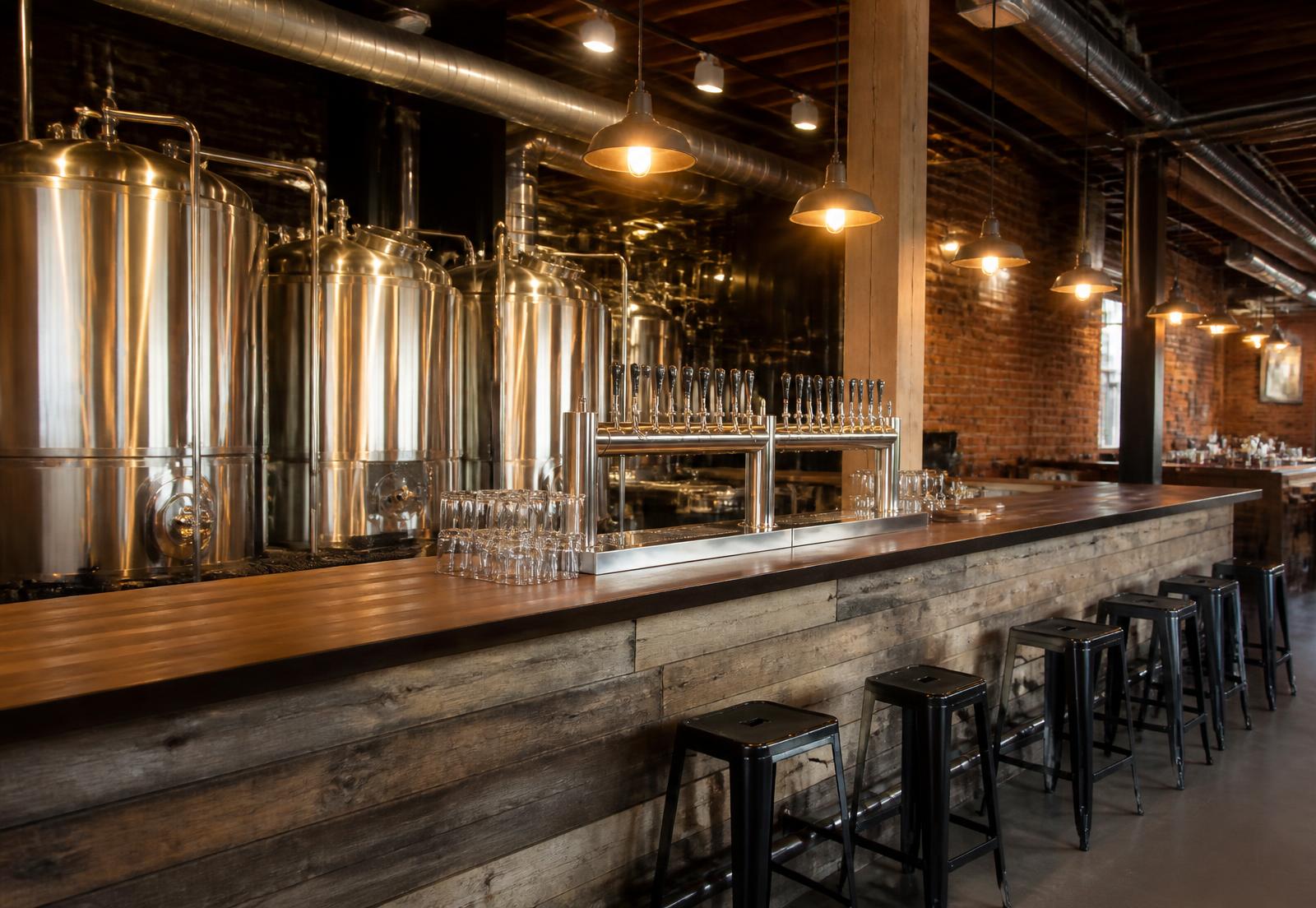
Architecture can suggest a history without proving it. Exposed brick, timber, or industrial-looking fixtures do not establish a building’s original use. If a venue’s building story interests you, look for address-specific historic documentation through the City of Charlotte. Mecklenburg County POLARIS can help identify a parcel, but parcel information alone is not a complete architectural history.
Location labels also need care. A business name containing “NoDa” does not establish that every location sits within the neighborhood. Nor is 28205 a neighborhood boundary. Use the NoDa map for orientation, then match the venue’s own address to the destination you intend to visit. Check which location an event announcement describes before making plans around it.
A brewery and a taproom are not interchangeable
For planning purposes, distinguish production from hospitality. A brewery makes beer; a taproom is a place where beer is served. Those functions can share a site, but the word “taproom” does not promise visible brewing equipment, tours, a kitchen, or a particular selection of drinks. A brewery may also operate more than one kind of public-facing space.
That distinction shapes expectations. Someone interested in brewing processes needs to verify whether public tours exist and whether reservations are required. Someone arranging a conversation needs information about seating and programming instead. Our breweries and taprooms guide provides a topic-focused starting point; the operator’s current location page and event notices should settle the practical details.
A published beer list is also a snapshot, not a guarantee. If a particular style, nonalcoholic drink, or ingredient restriction is central to the outing, confirm its availability directly with the venue rather than building the entire plan around an older menu photograph.
Look for the social format behind the event listing
Taproom culture is partly about the permission to gather without making the entire visit a formal meal. Yet a shared table, a trivia program, and a ticketed performance create different social settings. None is automatically better; the question is whether the format fits the people coming with you.
Read beyond an event’s headline. Confirm its date and location, whether it requires admission or registration, and whether it takes over the whole room. An event advertised by an outside organizer should also appear in the venue’s current information before you treat it as settled. A recurring label is not proof that a program continues indefinitely.
For a group, establish the basics before arrival: how seating works, whether tables can be reserved, and whether separate purchases are practical. Do not assume a large room welcomes an unannounced large party. Equally, a quiet-looking photograph cannot establish how easy conversation will be during amplified programming.
Food, families, and dogs require separate answers
“Food available” can describe an in-house kitchen, a visiting vendor, delivery arrangements, or permission to bring something from elsewhere. These are not interchangeable. Verify the arrangement for the intended visit, including whether food service and beverage service follow different schedules. The NoDa dining guide can help frame a separate meal plan, but a neighboring restaurant does not establish a taproom’s outside-food policy.
Family and pet policies deserve the same precision. Ask whether minors are permitted for the particular event, not simply whether the venue describes itself as family-friendly. Check whether dogs are allowed indoors, outdoors, or neither. A patio photograph showing a dog is not a substitute for the current policy.
For guests who are not drinking alcohol, look beyond a general promise of options. Confirm the actual choices and any ingredient information that matters. A welcoming group plan should not require every person to buy beer or explain why they are abstaining.
Make accessibility part of choosing the venue
Accessibility is more useful as a set of concrete questions than as a single label. Ask about the step-free route from the sidewalk or drop-off area, the entrance in use, restroom access, and seating that works for the person attending. Outdoor seating may have a different access route or surface from the main room.
Sensory conditions matter too. Ask whether the intended visit coincides with amplified music, whether there is a quieter seating area, and whether that area remains available during events. These questions concern a specific experience; neither a building’s age nor its appearance reliably answers them.
Plan the return trip before the first drink
NoDa’s relationship to the LYNX Blue Line makes transit worth considering, but a station on a map is not a complete travel plan. Use CATS’ official trip-planning and service information for the date of travel, including the return journey and any alerts. Our transit and walkability guide offers neighborhood context without replacing current operating information.
Inspect the route between the stop and the actual entrance. Crossings, sidewalk continuity, weather exposure, and mobility needs matter more than an unsupported promise that everything is a short walk away. For driving, read posted parking restrictions and lot terms; nearby residential streets are not overflow space by default. Choose a sober driver or another return option before drinking.
Remember that the gathering place has neighbors
The neighborhood setting is part of the attraction, and it creates obligations. Keep doorways and sidewalks clear, wait for rides without blocking access, and lower voices when leaving commercial activity for residential blocks. Do not assume an outdoor drinking area extends onto the surrounding sidewalk; verify applicable rules with the venue and the City of Charlotte.
The most durable way to enjoy NoDa’s taprooms is to treat them as places within a living neighborhood, not isolated destinations. Check the details that can change, choose a format that suits the whole group, and leave room for the people who call the surrounding streets home.
Answers
Questions & Answers
Does a brewery with NoDa in its name have to be in NoDa?
What should I check before bringing children or a dog to a taproom?
Source: City of Charlotte / Mecklenburg County Code Enforcement permitting
How should I plan a transit trip to a NoDa taproom?
More from the journal
The LYNX Blue Line in NoDa: A Commuter's Seasonal Reality Check
An editorial examination of the LYNX Blue Line's impact on daily commuting in NoDa, analyzing what transit rhythms have evolved and what core patterns remain steady.
Publisher's businesses
The Peters businesses
Reading only gets a NoDa project so far. When it turns into offers, drawings or wiring, these are the companies connected to this guide.
These businesses are owned by or connected to this guide's publishers, Nicholas and Miriam Peters. Read the disclosure.
The wider family of guides is on Beyond NoDa.
- 01
Luxury real estate
Peters & Associates
The Peters brokerage's luxury practice, led by Nicholas and Miriam Peters, representing buyers and sellers privately.
Buying or selling a higher-end NoDa home — a renovated bungalow, a new infill house, a top-floor loft.
- 02
Real estate representation
Peters & Associates — The Peters Team
The same brokerage's Charlotte-wide site, with a home search and home-valuation requests. A separate website from yourleaderinluxury.com, not a redirect.
Condos, townhomes and first purchases, or weighing NoDa against other Charlotte neighborhoods.
- 03
Luxury custom home builder
Peters Custom Homes
A founder-led Charlotte builder of a small number of custom estate homes a year.
A substantial new house or major rebuild on a lot that can support one. Most NoDa lofts and condos are not that project.
- 04
Luxury spec home builder
Peters Signature Homes
The Peters spec-home company, building finished homes for sale rather than to a client's drawings.
Buyers who want a newly built house without running a build. No current NoDa inventory is implied.
- 05
Interior design
Emerald & Oak Design
Miriam Peters' interior design studio, working on custom homes, renovations and new construction.
Planning a renovation or furnishing a loft or bungalow where layout and materials both matter.
- 06
Home audio, video & technology
Peters Audio Video
Home theatres, whole-home audio, lighting control, networking and security.
Wiring a renovation or new build. In a condo, check building rules on penetrations and wiring first.
- 07
Luxury travel guides
Peters Signature Travel
Luxury travel guides, hotel reviews and destination insights.
Not a NoDa service — listed so it stays one click away.